Translate

Sunday, June 14, 2015

Indian removal and Buffalo soldiers

           As the school year comes to a close, we prepare for the last few days of class, and the impending final exams. Even though our history class is paperless, we are no exception to the final exam. However, that doesn't mean that we can't make it new and interesting. For the final, we are allowed to draft our own questions based on research done in class on various topics. The latest question topic is Buffalo soldiers and Native Americans. As a class, we first had to thoroughly research Buffalo soldiers and Native Americans before writing the questions, through the resources provided by our teacher. We watched various videos on ABC Clio databases on the lives of Buffalo soldiers and Native Americans. Then, we looked at primary source documents and images such as, Helen Hunt Jackson: a century of dishonor(1881), the Dawes act(1887), and the Federal Native American Policies visual. While analyzing the videos, documents, and images, our class split up into groups and took notes on the essential terms, key people, important events, and the main idea in a Google Document shared with the class. Based on the research, we then had to form an opinion on wear or not the government had good intentions when enacting policies for westward expansions. And in what ways did these policies impact the Natives and Buffalo soldiers?
           In the year 1830, the United States of America is still in its infancy. States are still being formed, and no one has expanded west of the Mississippi river. In order to grow into the vast country we know today, these lands need to be occupied. So, on May 28, 1830, the Indian removal act was passed by congress during the presidency of Andrew Jackson. The law authorized the president to negotiate with Indian tribes in the southern united states for their removal to federal territory west of the Mississippi River in exchange for their ancestral homelands. These tribes included the Cherokee, Choctaw, Chickasaw, Creek, Seminole, Sioux, Dakota, Lakota, Nakota, and the Oglala. Well, these tribes were not going to leave their home and be corralled like farm animals into reservations just because some president asked them nicely. In the 1840's, the California gold rush brought many prospectors flooding into the west. Conflicts between the prospectors and Natives led to massacres, wars, and prejudice towards tribes. After the Indian removal act have little effect, the government used these conflicts between settlers and natives as an opportunity to take aggressive actions. Congress created six regiments of African american soldiers left over from the civil war. Four infantry, and two cavalry, approximately 1000 men each who come to be known as buffalo soldiers. Deployed to fight back against the native tribes, these regiments were involved in at least 117 of 138 campaigns fought against the Indians on the western frontier. Also taken from the civil war, was total war. After the effect of total war at the end of the civil war, the government decided to use it to wipe out the Indians. It began with the extermination of buffalo, the main source of food and clothing for the tribes, and the killing of their horses that natives use for transportation. The Second Treaty of Fort Laramie in 1868 promised Indians possession of the Dakota territory west of the Mississippi river if they promised to stop fighting. Red Cloud leads many of his people onto the new reservation. Crazy horse and Sitting bull refuse to go. In 1876, confrontations come to a head at the Battle of Little Big Horn. Crazy horse surrounded General Custer with 5000 Sioux and Cheyenne Indians, killing Custer and letting few men escape. This caused the government to flood the area with national troops. Beginning in June 1877, 600 members of the nez perce tribe, seeking to escape the united states army, traveled 1,600 miles in an attempt to reach Canada. Along their march, the nez perce were constantly being hunted and chased down by the U.S. army. At the final holdout at Bear Paw Mountain, the nez perce were forced to stop and agreed to relocate, only 40 miles from the Canadian border and freedom. Only 400 survivors made it to the reservation. After many years and many battles, conflict still remained. However, the conflict came to an end at the Wounded Knee Massacre in 1890. More the 150 Sioux Indians were slaughtered, effectively ending Indian resistance to white culture. Although the government had good intentions when enacting policies for westward expansion, these policies greatly impacted the lives of Native Americans. The Natives were made a target of prejudice, stripped of their homes and culture, and killed by the hundreds.
The following image shows a timeline
of major events regarding Native
conflicts. Citation.
           On September 21, 1866, Andrew Jackson created six regiments of African american soldiers, called Buffalo soldiers. These men were sent west to fight back against the eruption of native american violence. These regiments of buffalo soldiers were involved in at least 117 of 138 campaigns fought against the Indians on the western frontier. These men were soldiers left over from the civil war, originally members of the U.S. 10th cavalry. Due to continuing conflict in the west, buffalo soldiers had to remain stationed there. When they were not fighting Native americans, buffalo soldiers were given the jobs of laying down telephone lines, mapping unknown territory, and constructing buildings. The buffalo soldiers were more used as a labor force than an army. Also, the government supplied them with poor resources. They were given horses that were fit to be slaughtered, and weapons left over from the civil war. Even though their work did not sound like much, it was all they had. Most blacks did not have any jobs to go back to after the civil war. The policies of westward expansions greatly impacted the lives of buffalo soldiers. The government gave buffalo soldiers the dirty work the whites did not want to do, sent them to the places that no one wanted to go, gave them the resources that no one wanted to have, and were used as a labor force.
Buffalo soldiers are shown together
on the job. Citation.
           In modern day, many of the conflicts between Native americans, the governments violent extermination, and the lives of buffalo soldiers are ignored, but not forgotten. The effects of these events are still visible today. Indians are still surrounded with prejudice and stereotypes, and are forced to live on reservations. Even on reservations, many are poor without a dollar to their name. Natives are among the poorest people in the United States. Due to this poverty, many Native americans on reservations turn to alcohol. This forms a vicious cycle where natives spend the very little money they have on alcohol, and form alcohol dependencies due to depression, and cannot find jobs. Also, the effects of buffalo soldiers are still seen today. African americans are now playing key roles in the U.S. armed forces with highly respected ranks. The president of the United States is even an African american. However, in some parts of the country, blacks are still being discriminated against, and conflicts have tuned violent.

Thursday, June 4, 2015

Andrew Carnegie and John D. Rockefeller: robber barons or captains of industry?

           For the past 3 days, the focus of class has been the business ventures and tactics of Andrew Carnegie and John D Rockefeller. The essential question we formed for the lesson is, Should Andrew Carnegie and John D Rockefeller be classified as robber barons or captains of industry? A "robber baron" is a powerful, corrupt businessman who destroyed or bought out rival businesses, treated workers poorly, bribed government officials, and hired personal armies in order to gain personal wealth. A"captain of industry" is a powerful businessman who is the leader of a specific industry and affects the community positively. In order to learn more about Andrew Carnegie and John D Rockefeller, we began a series of step by step assignments. First, our amazingly innovative teacher, Mrs. Gallagher, introduced the class to a four day plan about what we should be accomplishing each day. The purpose of the project is to form 40 questions on the topic to be used for the final exam. Then, we divided ourselves into four groups, key people, main ideas, important events, and essential terms. We then passed created a class wide google document to compile all of the information we collect in. Next, we watched an in depth video on the business tactics of Andrew Carnegie and John D Rockefeller. While watching, each group was responsible for taking notes on their topic and typing a summary of the notes into the google document. After all of the information was collected and analyzed, we had a discussion as a class where each group proposed an essential question that could be used to represent the lesson.
           Based on the information we collected as a class, Andrew Carnegie and John D Rockefeller should be classified as robber barons. During their rein of industry, both Carnegie and Rockefeller employed many corrupt tactics in order to gain advantage or personal wealth. In 1856, while trying to jump start his newly formed steel business in America, Andrew Carnegie committed many underhanded acts. "In this way, he was able to produce a higher quality steel at a lower price than his American competitors. He also kept production costs, wages, and salaries down and maintained complete control over his enterprise, in order to plow profits back into it."(McGuire, William, and Leslie Wheeler. "Andrew Carnegie." American History. ABC-CLIO, 2015. Web. 31 May 2015). In order to get his company's wheel's in motion and dominate rival businesses, Carnegie purposely kept wages and salaries of workers low. This selfish act takes money away from workers for Carnegie own personal wealth. In 1892, Andrew Carnegie was again under the public eye during the Homestead strike. " Four years later, however, Carnegie's reputation as an employer was damaged by the bloody Homestead strike at the plant. The strike, which began on June 29, 1892, revealed Carnegie's plans to destroy the iron and steel workers' union, and the event raised a public outcry."(McGuire, William, and Leslie Wheeler. "Andrew Carnegie." American History. ABC-CLIO, 2015. Web. 31 May 2015). In response to Carnegie's plot to destroy the union and threats of wage decreases, members of the iron and steel workers union began to strike. In many cases it became violent and often bloody. This was a direct result of Carnegie willing to destroy the union for his own personal gain. In 1882, under public scrutiny regarding the trust with standard oil, John D Rockefeller was accused of using underhanded business tactics. "Many suspected that Rockefeller and his associates had used illegal tactics and immoral business practices. Although Rockefeller paid fair market value for many companies he acquired, he drove others into submission through cutthroat attacks, such as selling oil at a loss and then, after the competitor collapsed, driving up prices. He was also directly involved in bribing politiciansóone observer commented that Standard Oil had done everything with the Pennsylvania legislature except refine it."(McGuire, William, and Leslie Wheeler. "John D. Rockefeller." American History. ABC-CLIO, 2015. Web. 31 May 2015). By attacking other by choking them out of the industry, and bribing government officials John D Rockefeller destroyed rival businesses and gained advantage using illegal tactics and immoral business practices. Carnegie and Rockefeller employed corrupt tactics to gain advantage or personal wealth, and should be classified as robber barons.
One the left, Andrew Carnegie is shown reducing wages. On the right side, he is 
shown giving back to the community.(Forty-Millionaire Carnegie in his Great Double Role," The Saturday Globe, 9 July 1892; from David P. Demares)

           In modern day, we do not hear much about robber barons. Mainly because in the early 19th century these business tactics used by Carnegie and Rockefeller were unheard of, but today they are common practices. Google executive chairman Eric Schmidt is an example of a modern day robber baron. Google admitted that it "used deceptive tactics and violated its own privacy promises to consumers."( "Google 21st Century Robber Baron." Forbes. Forbes Magazine. Web. 5 June 2015.). This happened under Eric Schmidt's watch and knew that this was happening. Googles rap sheet is extensive and doesn't and there, and the same for many other well known companies that we are all familiar with. Another example of a modern day robber baron is Sepp Blatter and FIFA. FIFA was accused of unfair agreements with officials regarding money. News of robber barons and corrupt companies are not popular news today because it is so common, and most people are used to it.

Wednesday, April 29, 2015

Freedom From Above or Below

           Lately in history class, we have been analyzing documents and producing charts to find the answers to intriguing questions. Early one morning, the class was introduced to a picture depicting a slave kneeling down before Abraham Lincoln. It appears that Abraham Lincoln had freed the slave, and the slave is thanking him. This picture fueled a lot of discussion and difference of opinion, which is why the picture is the center of our essential question. Who gave freedom to enslaved Americans?Did freedom come from above or below?To what extent were Abraham Lincoln's actions influenced by the actions of enslaved Americans? In order to answer this essential question, we performed many tasks as a class. We first watched videos and were assigned a document to analyze as a group. Each group was signed one of four documents and then had to find quotes from the documents to put into the following categories: goal of the war, position on freeing slaves, and evidence of personal feelings on slavery. Then, each group used the whiteboards to draw a chart, putting the documents into two categories: Freedom from above, and freedom from below, based on whether or not the document is evidence of freedom from above or freedom from below.
           As a class, we analyzed documents in order to answer the following question: Who gave freedom to enslaved americans? Did freedom come from above or below? To what extent were Abraham Lincoln's actions influenced by the actions of enslaved americans? Freedom from above or below means whether or not slaves were freed due to actions taken by themselves or by the authority or superiors such as Abraham Lincoln. Based on the documents, it is evident that freedom came from above. Abraham Lincolns excerpt, Emancipation proclamation, Gettysburg address, and the second inaugural address all show evidence of freedom from above. Freedom from the authority of superiors.
Document X Letter from general Ambrose E. Burnside, and Document Y engraving both show evidence of freedom from below. Freedom by being proactive and taking action for yourself. Abraham Lincoln's actions were very much influenced by the actions of enslaved americans. During the civil war, slaves would see the union troops and follow them around and make a nuisance of themselves. The slaves would take up a lot of resources such as food and living space. The union officers would report this to their superiors and these complaints would eventually make it all the way to the president.
Throughout history and in modern day, there are many examples of freedom coming from above and below. However, in my opinion freedom comes from below. In modern day, the "freedom from below" does not exactly have to be freedom. Any situation in which you are changing your situation and bettering yourself by being proactive and taking initiative for yourself could be considered freedom from below. A modern day example of freedom from below is excelling on a sports team. Everyone on the team plays, but if you want to reach varsity, you have to be proactive and take it upon yourself to work harder. The coach is not going to just move you up out of the blue.

Wednesday, April 8, 2015

Civil War Battles Scavenger Hunt


           Lately in class, we have been learning about the many battles of the civil war in order to answer the following questions: Who was the ultimate victor in each of the theaters of war, East, West, and Naval? What are some commonalities you can identify in the reasons for the results of the battles? Instead of taking notes off of a board while the teacher lectures, our class took a different approach. To learn more about the battles of the civil war, we had a civil war battle scavenger hunt. In order to have the scavenger hunt, each student first had to pick a civil war battle of their choice. After choosing a battle, each student then had to find the name of the battle, the location, when it was fought, the victor, in which theater of war the battle was fought(east, west, naval), reasons explaining the outcome, and one image. Also, each student included directions to the next poster in their Google doc. Once the necessary information was recorded in a Google doc, the students then made a shortened url using bitly.com, a custom QR code, and a printed out poster including both. When the QR code is scanned, it redirects you to the Google doc containing all of the valuable information on that battle. When the posters were finished, the students then hung their posters in hidden locations, and began the scavenger hunt by scanning the battle after theirs and finding the next one until all posters had been scanned.
           Based on all of the information collected throughout the scavenger hunt, it is evident that the union dominated the western theater and naval theater of he civil war while the confederacy dominated the eastern theater of the civil war. The union dominated in many battles in the western theater, including the battle of  Fort Donelson and the battle of Vicksburg. In the battle of Fort Donelson, the confederates were unable to break General Grant's lines, leaving themselves with no choice but to surrender. In the battle of Vicksburg, the confederates suffered a lot more missing and captured soldiers than the union, causing them to surrender. The union dominated in many battles in the naval theater, including the battle of Hampton Roads and the battle of Fort Henry. In the battle of Hampton Roads(the battle of the iron clads), the unions superior naval force of four iron clads defeated the confederates one iron clad. In the battle of Fort Henry, the union army out numbered the confederates, who were poorly armed with out dated weapons. When the confederates fled Fort Henry, the union badly damaged the confederate's naval fleet, forcing them to surrender. The confederacy dominated in the eastern theater, including the battle of cold harbor and the battle of Second Manassas. In the battle of cold harbor, the confederates focused  on causing as much damage as possible and produced 7,000 union casualties in less than 1 hour. In the battle of Second Manassas, the confederate's heavy artillery and reinforcements devastated the union forces. A commonality between these battles is that the losing side was always out numbered or out gunned. This commonality is a reason for the loss of many battles.

           There were many challenges we faced during the scavenger hunt. The wifi in the school did not always reach certain areas of the building. An example of this is poster 17. Poster 17 was located in the field house, which was out of reach of the wifi. Wifi is necessary for the QR scanners on the ipads to work. This meant that poster 17 was unable to be scanned. Another challenge was the physical effort. In many situations, posters could be located at different ends of the school. Some times, you had to walk back and fourth form one end of the school to the other, and up and down stairs. Eventually, this became a little exhausting.

Wednesday, March 11, 2015

Infographic

Essential question: How did the differences between the North and South affect each regions strategy and success in the civil war?

I designed my infographic to resemble a students project on a piece of paper written in pencil. I made the background look like a sheet of paper and chose a font that resembled writing. Post it notes were also added to make it look more realistic. By putting the population statistics of the north and south at the beginning, the viewer gets an idea of how much of an advantage the north already had over the south, before introducing the other statistics. Out of that small southern population, only 75% of southern white families owned slaves and 25% did not. Even though not all southerners owned slaves, many fought to defend slavery because they were fighting to defend their lifestyle. The north had the advantage when it came to railroad mileage, industrial workers, and factories. The south had railroad mileage, industrial workers, and factories also, but the north easily had than 2 to 4 times more. By having a lot more factories and industrial workers than the south, the north was able to produce a vast amount of ammunition, weapons, and other goods to fuel the war. Also, by having more than 2 times the railroad mileage than the south, the north was able to transport soldiers and goods very efficiently. By analyzing these primary sources and making an infographic, I realized that north overpowered the south in almost all categories. The infographic clearly showed the north drowning the south in statistics, and these advantages and disadvantages are why the north won the war.
infographic

Thursday, March 5, 2015

Slavery: The Elephant In The Room

           How do we know the debate over slavey was the "elephant in the room" for American politics in the early 19th century?

           Over the last few days, we as a class have been researching and analyzing information in order to answer an essential question. How do we know the debate over slavey was the "elephant in the room" for American politics in the early 19th century? What this means, is how do we know the debate over slavery was the obvious problem that no one wanted to address for American politics in the early 19th century. To find the answer, we divided into groups of three and researched the following topics: the Missouri compromise, the compromise of 1850, Gadsden purchase, Kansas Nebraska act, bleeding Kansas, caning of Charles Sumner, Dred Scott decision, Lincoln Douglas debates, and John Brown's raid. Using Timline, we then recorded every topic onto a timeline and organized it in order of occurrence. After thoroughly analyzing information, the answer was evident. We know the debate over slavery was the "elephant in the room" for American politics in the early 19th century because was slavery was the sole cause of many major political and social events such as the compromise of 1850, Bleeding Kansas, the Dred Scott decision, the Lincoln Douglas debates, and John Brown's raid.
           Slavery was a big issue during the compromise of 1850. In one of five parts of the compromise of 1850, the gold rush in 1849 drew a vast amount of people into the California territory. Eventually there were enough people in California for it to be recognized as a state. California territory petitioned congress to enter the union as a free state. This sparked a lot of controversy. Ever since the Missouri Compromise, the balance between slave states and free states had been maintained. Finally, California would be admitted as a free state. To pacify slave-state politicians, who would have objected to the imbalance created by adding another free state, the Fugitive Slave Act was passed. Slavery was the sole cause of this problem. The debate over slavery was such a big issue, it literally had the United States split in half.
           Slavery was the driving force in Bleeding Kansas. The Kansas Nebraska act of 1854 called for
 popular sovereignty. Meaning that the decision of Kansas entering the union as a free state or a salve 
state was to be determined by the settlers. In 1856, anti slavery settlers set up in Topeka, and pro slavery settlers set up in Lecompton. In some cases, the disagreement did get bloody. At Pottawatomie creek on the night of May 24th, John Brown, a white American abolitionist who believed in a violent overthrow of slavery, and his men took 5 men from their beds and killed them in front of their families. Slavery was what caused these events to happen.
           Slavery was the problem in the Dred Scott decision. In 1857, an enslaved man living in Missouri filed suit against his owner arguing that because he and his wife Harriet once lived in states and territories where slavery was illegal, he and his wife were free. This issue was eventually taken before the Supreme Court, which ruled 7 to 2 against Scott. The effects of the Dred Scott decision were that slaves were not citizens and were denied the right to sue in court, enslaved people could not win freedom simply by living in a free territory or state, and the Missouri compromise was ruled unconstitutional and all territories were opened to slavery. The debate over slavery caused this to happen.
           Slavery played a big role in the Lincoln Douglas debates. During an election between
Abraham Lincoln and Stephen Douglas in 1858, Lincoln and Douglas engaged in a series of seven debates called the Lincoln Douglas debates. Douglas supported popular sovereignty, and believed people could rule as they wished, including making slavery legal. Lincoln believed that a majority should have the power to deny a minority their rights to life, liberty, and the pursuit of happiness. The main issue during these debates was slavery. Douglas was pro slavery and Lincoln was anti slavery. Douglas went on to win the election. Slavery was what fueled these arguments.
           Slavery ignited the violent actions in John Brown's raid. On October 16th 1859, three years after his raid at Pottawatomie creek in Kansas, John brown attacked the federal arsenal at Harper's ferry, Virginia. With him were 21 men including 5 African Americans. In an attempt to steal weapons to arm enslaved people so they can rebel. Troops under the command of colonel Robert e Lee, surrounded the arsenal and killed half of browns men including two of his sons before they surrendered. Convicted of treason, John brown was hanged. The debate over slavery was what caused    
this violent uproar.
           The debate over slavery was the "elephant in the room" for American politics in the early 19th
century. It was the issue that needed to be addressed and could not be ignored. Slavery fueled disagreements and violence in many social and political events.


Monday, February 23, 2015

Antebellum Slavery

           By the early 19th century slavery had become economically entrenched in American society. But why? To put it simply, cotton is to blame. By the late 18th century, slavey was declining and the cotton industry was almost non existent. In 1793, Eli Whiteney's invented the cotton gin which easily removed seeds from cotton. This made cotton easier and more profitable to grow. As the demand for cotton grew, so did the slave industry. Slaves could bring in $500 dollars a piece in 1794, but as cotton became more profitable, that number tripled to $1500 in 1825. The more cotton being produced, the more slave labor needed to pick and process the Cotton. By 1860, the cotton producing states in the south produced 2.28 billion pounds of cotton. This was 57% of the nations total export revenues. At the time, the total slave population of the United States was estimated to be approximately 3,954,000. Compared to 85 million pounds of cotton and 1,191,000 slaves in 1810. By the early 19th century, slavery had become economically entrenched in American society because cotton was in the highest demand out of all crops, and the production of cotton depended on slave labor. http://mappinghistory.uoregon.edu/english/US/US18-00.html
           A system of slavery based on race affects human dignity because people see the whole black 
race as slaves and not worthy of similar freedoms and respect. In document G, it describes a speech that Frederick Douglas gave about the Fourth of July. Douglas spoke about how the Fourth of July is a day of celebration for whites, but a day of boasted liberty and swelling vanity for slaves who don't have this liberty. This system of slavery where slaves are not given the same liberty that is provided 
to whites, takes this liberty away from all blacks. That the Fourth of July is just a reminder that blacks don't have the same freedoms as whites. In document H, George Fitzhugh says that the whole negro race is weak and were born to be slaves. Describing blacks as dumber, inferior, and not worthy of respect.http://www.edline.net/files/_BEHdp_/b9a40a0b44d61aac3745a49013852ec4/Morality_of_Slavery_DBQ_Documents.pdf


          Such a system tends to ignore human characteristics such as god given rights and humane 
treatment. Slaves in the US had no privileges. They were owned by their masters and had no control over their own lives. Slaves were considered property and had a price. Blacks were enslaved by being captured and sold. From that point on, they were no longer considered people and were not treated as such.http://princeamongslaves.org/module/comparing.html


Wednesday, February 4, 2015

Women's Reform

Essential Question: How did mid 19th century American society react to women's demands for equality? Does 21st century society still react differently to men and women?
           The way Women were treated prior to their granted equality, could be best described as the unjust oppression of human rights. In many ways, the way women were treated was borderline slavery. Women were confined to a certain set of laws and common practices. Women were expected to maintain a family like a well oiled machine, while at the same time were not allowed to own property, all possession belonged to their husband, could have her children taken away from her if the father dies, it was legal and encouraged for a husband to beat his wife, women we're not allowed to vote, colleges did not accept women as regular students, women could not sign contracts, and women only got paid 30-50% of what men were paid for the same job. In July 1848 more than 300 men and women assemble in Seneca Falls, New York for the nations first women's rights convention. Many people thought the idea of women's equality was silly and rash. Though there have been great advances in women's rights since the Seneca Falls convention, women are still not treated equally. During the mid 19th century American society thought women's demands for equality were unrealistic and 21st century society still reacts differently to men and women.
           Mid 19th century society thought that women demands for equality were silly and unrealistic. At the time, people believed that these demands were crazy. As if women were requesting to live like royalty. Many men believed that it would cause everyday society to fall apart. One man declared, "If our ladies will insist on voting and legislating, where, gentlemen, will be our dinners and our elbows?  Where our domestic firesides and the holes in our stockings?"(The Seneca Falls Convention, Oneida Whig, August 1, 1848). Arguing that if women gain equal rights, who will cook dinner and set the table?
           Today 21st century society still reacts differently to men and women. Women are sometimes not given jobs that men are usually responsible for. Also, there are still expectations for how women are supposed to act. If a woman is in a management position, people will think that she is bossy. Where as if a man  is in a management position, people will think that he is a leader.
           During the mid 19th century American society thought that women's demand for equality were unrealistic and crazy. Society believed that the social order would collapse and everyday jobs would no longer be done. Society today in the 21st century still treats men differently than women. Men are often seen as harder working and more tough. Women will sometimes be denied jobs that men commonly do.


Sunday, January 11, 2015

19th Century Social Reform Sourcing Blog

           "A young lady will be very unsafe in marrying a young man who uses ardent spirits, either temperately or intemperately, because more women have been rendered wretched on account of drunken husbands, than by anything else. When Lavinia and Laura and Margaret, were led by their husbands to Hymen's altar, their husbands only took a little. Lavinia was the mother of four children, when the sheriff sold the last bed she had, for her husband's drams. Laura had three lovely babes, when her husband was carried off to jail, and she was left without bed, bread or home. Margaret had two children when their sottish and brutish father went to an untimely grave, and she and her babes were cast upon the world penniless. Beware young ladies of him who can drink a dram even in a week. Don't marry a reformed drunkard, as a man hardly ever gets clear of this awful disease. If you want to be miserable marry a man who drinks, who takes a little, and you are more likely to have the above enjoyments than in marrying any other character. If a man cannot give up his dram, he can sacrifice the happiness or property of any woman by taking a little."

           From the New England Farmer and Horticultural Journal VIII, no. 14 (October 23, 1829).
Sourcing: It is clear that the author is opposed to men who drink. The author's purpose in producing the document is to warn young women not to marry men who have drinking problems. The document is believable because the author provides detailed stories of women who were effected by men who drank.
Contextualization: During the time the document was produced, there was an overdrinking epidemic.
There were actual fears that the United States was on the verge of becoming a nation of drunkards. Many men became very dangerous or could no longer support their families. The document teaches  readers what women and children went through because of men who either were too drunk to support their families or died because of drinking. This document gives the reader a complete picture of what it was like during the 1800's when many men had drank their way into either unemployment or a grave and their wives and children had to suffer the consequences.
Close Reading: The authors opinion is to avoid marrying men who drink. The authors reasoning is that women who marry men who overdrink will end up homeless, penniless, and miserable. By choosing words such as " awful disease" and "miserable", the author is trying to convincing the reader that the position the families are in is horrible.

Tuesday, December 16, 2014

Andrew Jackson

Essential Question: Is Andrew Jackson's long standing reputation as "the people's president" deserved? Why? Why not?

           Andrew Jackson was known as "the people's president". But was it deserved? There are many reasons for why Andrew Jackson was anything but the peoples president. The most compelling examples of why Andrew Jackson was anything but the peopls president are the bank war, the spoil system, and Indian removal. During the bank war, President Jackson strongly disliked the bank and believed it had too much power. Jackson refused to pass a bill that extended the banks charter, and the economy eventually collapsed as a direct result of Jackson's decision. Also, Jackson would reward supporters of his campaign with high government jobs. This is called the spoil system. While this system seems to be very appealing, most people appointed to these jobs were very unqualified, and sometimes even criminals. As a result of this, the government and the quality of decisions suffered.
Lastly, Andrew Jackson was responsible for Indian removal. Many tribes were forced to leave their homeland and thousands died during the journey. Jackson believed that he was saving them from the white people. By relocating the Indians, he believed he was doing them a favor. President Jackson said that Indians and whites couldn't live together. All of these elements together form a compelling argument to why Jackson was anything but the peoples president. In my group Project, we explained how all of these reasons put together shows that Jackson is not "the people's president".

Thursday, November 27, 2014

Latin American Revolutions

Essential Question: Why is it essential to acknowledge human value regardless of race? How are the events in the Latin American Revolutions evidence of this social imperative?

           The essential question asks, why is it essential to acknowledge human value regardless of race? How are the events in the Latin American Revolutions evidence of this social imperative? To learn more about this topic, we first completed a pie chart of the different race percentages of Latin America. Then, as a class we divided into 3 groups (Mexico, Gran Columbia, and Brazil), analyzed documents, and made a timeline of events for our document topic. Lastly, we formed jigsaw groups, where a person from each revolution group formed a group of 3 with 2 other students, so that there was a representative for each revolution group, and shared information to answer questions.
         
During the jigsaw, we discussed 2 commonalities and 2 differences between the 3 
Revolutions. In my group, the 2 commonalities between the revolutions that we discussed were that the countries revolting all declared independence in some sort of way, and that all of the revolutions ended around the same time. The 2 differences between the 3 revolutions were that all of the countries fought different people, and they all fought in different places. Upon sharing information, we learned that race was clearly an issue in all of the revolutions. In all of the revolutions, people did not like their leaders being of another descent. They thought that their leaders would not be loyal to their country due to their nationality. Some thought that their leaders would secretly be helping their home country.
           Race still manages to play a big role in society today. It would be nice if race didn't matter, but unfortunately it does. People stick together based on similarities, such as race, and make judgments based on race. Currently, race is a popular topic in the news. There have been issues arising in Ferguson, Missouri lately. A black boy was killed by a police officer, and there have been huge race riots as a direct result of it. The topic of race is a very sensitive and controversial one. Race is a very important issue and is not to be taken lightly. Outbreaks are starting to erupt, but soon the floodgates will give way to the overwhelming pressure surrounding race issues in our society today.


Sunday, November 9, 2014

Revolutions of 1830 and 1848

Essential Question: Were the revolutions of 1830 and 1848 really failures as many historians have concluded?

     Lately in class, we have been studying the revolutions of 1830 and 1848. Our goal has been to figure out if the revolutions were complete failures, or if they accomplished something productive. To find out, the class was split into groups and each group was assigned a revolution. Each group examined documents about their revolution and took notes. With this information, each group made a survey monkey. As a class we took each other's survey monkeys and went over the answers.
     My group and I were assigned the French Revolution of 1848. We analyzed documents and took notes on the goals, opponent, outcome, and reason for success or failure of the revolution. We then created a survey monkey on the information. During the French Revolution of 1848, the people denounced Louis Philippe's government for corruption. Discontent was heightened by a recession and many people lost their jobs and the price of bread rose.  The people demanded expanded suffrage. Louis Philippe abdicated, and the second republic was proclaimed. Middle class liberals wanted political reforms and socialists wanted social and economic change to help feed hungry workers, and New jobs were demanded. Workers rioted for lower bread prices, and bourgeois attacked them. The constitution for the second republic was issued which created a strong president, a one house legislature, and gave all adult men the right to vote.  Napoleon III was chosen to be the president of the second republic, but eventually proclaimed himself emperor, which ended the second republic.The second republic is described in Readings in European History. "The republic is proclaimed. The people are united."(J. h. Robinson, 1906, Readings In European History). Also, information on Napoleon III declaring himself emperor can be found in The Rise and Fall of The Second Empire. "In short, I asked myself: since France has been functioning for the past fifty years only thanks to administrative, military, judiciary, religious and financial organization of the consulate and the empire, why should we not also adopt the political institutions of the period?"(Alain Plessis, 1852-1871, the rise and fall of the second empire).
     Not all of the revolutions of 1830 and 1848 were failures. Some of them were complete failures, while some of them were profitable. The Decembrist revolt of 1825 was a failure. The people of Russia were fine until the death of Tsar Alexander I. After the death of Tsar Alexander I, Tsar Nicholas I was left the thrown. Everything went downhill from there. This is described by Marquis de Astolphe Custine Custine. "The government of Russia is an absolute monarchy moderated by assassination...The more I see of Russia, the more I approve of the conduct of the Emperor in forbidding his subjects to travel, and in rendering access to his own country difficult to foreigners.". Tsar Nicholas made it so that no one could leave Russia, and made it difficult for people to come into Russsia. He also left the peasants In a state of unforgivable neglect. This revolution was a complete failure. The French Revolution of 1848 was almost a success. After Louis Philippe was abdicated, the second republic was proclaimed. While it stood, the second republic benefitted many. This is described in the French Revolution of 1848 document. "Napoleon III, like Louis Philippe, ruled at a time of rapid economic growth. For the bourgeoisie, the early days of the second empire brought prosperity and contentment.". The people did receive some of the things they were hoping for, like extended suffrage. The bourgeoisie won too because they created the National Assembly and elected the new government. This revolution was almost a success. Lastly, the revolution of Hungary of 1848 was a success. Hungary wanted an independent government, but Austrian troops smashed the rebels in Budapest. Many were imprisoned, executed, or forced into exile. Then Louis Kossuth wrote a Declaration of Independence. This is described in the revolution of Hungary of 1848 documents. "On April 14, 1849, the Hungarian Parliament in Debrecen, following an appeal by Kossuth, unanimously adopted the following declaration.". Hungary was now free from Austria. This revolution was a success.


Thursday, October 30, 2014

Congress of Vienna

Essential Question: What should people in power do when their power is threatened?

     In class, we have been studying Napoleon and his conquests. Obviously Napoleons reign did not last forever. Eventually Napoleons power was threatened, and he was exiled to the island of St. Helena where he died in 1821. This begs the question, what should people in power do when their power is threatened? To answer the question, we have been reading documents and watching reenactments about the decisions of Klemens Von Metternich and the Congress of Vienna.
     When Metternich and the other powerful people at the Congress of Vienna noticed that their power was being threatened by Napoleon, they eliminated him with the concept of balance of power.
The Congress of Vienna decided to bring French territory back to its boundaries as existed prior to expansion. Further, expand Prussian territory so as to surround France with a stronger neighbor. Establish the Kingdom of the Netherlands as another stronger border state. Give Russia and Austria additional territory as a condolence for the difficulties faced under Napoleon’s conquest. This land redistribution will ensure a balance of power for the allies in the face of any later attempts at French expansion. The reason for this was because it maintained a balance of power between Russia, Austria, Prussia, Britain, and France. It also reversed the changes of Napoleon's conquest. The impact that the Congress of Vienna had was peace among the major European powers. There were no wars between the 5 major powers of Europe up to 1853.
     I believe that the Congress of Vienna made the right decision. There would have been no need to punish France by taking additional land away. The only way that the Congress of Vienna could peacefully restore order was to only take back the land that Napoleon acquired during his conquest. Also, by surrounding France with strong neighbors and redistributing land, France could no longer expand like it did before. This choice may have not been the most popular among some people, but it was definitely the right one. In this situation, it is crucial to be willing to give up some of your power for the greater good. If the European powers were not willing to give up some of their power, there would have been no land redistribution, and no solution to protecting their power form Napoleon.


Wednesday, October 22, 2014

Ideologies

Essential Question: What were the major political ideologies of the 19th century and how did they influence social and political action?
     Lately, we have been studying conservatism, liberalism, and nationalism. The major political ideologies of the 19th century. To learn more about these ideologies, the class was divided into six groups. Each group made a presentation on either conservatism, liberalism, or nationalism. Once the presentations were finished, we watched them as a class. While watching the videos, we discussed and took notes.

     Liberalism presentationMy common craft presentation helps define and liberalism because it gives key information and the main beliefs about it. Such as the belief in individual liberty for all. Another important aspect of liberalism is the belief in human born natural rights. Rights you aquire naturally from birth. Liberals supported innovations and reform and thought that religions were just superstitions. Liberalism influenced social action during the 19th century through beliefs in social status. Liberalism supported meritocracy, the belief in acquiring jobs based on your skills and not your social class, and middle class participation in government. This gave more people a chance to change their social status and have a say in government. Liberalism also influenced political action during the 19th century through beliefs on how government should control people. It promoted constitutional monarchy over absolutism. Also, liberalism asserted that the goal of government was to protect and promote individual liberty. 
    From watching the presentations on conservatism, I now know that conservatism did not promote innovation and reform(unlike liberalism), and supported keeping things traditional. Conservatives feared change. They thought there would be a revolution if the change failed or backfired. They also supported monarchy. Conservatism influenced both social and political action during the 19th century through beliefs in how the government should control people and determine social class. Nineteenth century conservatives supported monarchy, the hierarchical class system dominated by aristocracy, and the church. They also opposed innovation and reform. From watching the presentations on nationalism, I now know that nationalism is the bringing together of nations through shared language culture and history. Nationalism and liberalism both shared a spirit of optimism, believing that their goals represented the inevitable, historical progress of humankind. Nationalism influenced both social and political action during the nineteenth century through beliefs in uniting nations. Nationalism supported the belief of uniting nations to make them stronger as a whole. Bringing together through language, culture and history. 


Tuesday, October 14, 2014

Napoleon's Impact on Europe

Essential question: What was Napoleons impact on the social, economic and political systems of Europe?
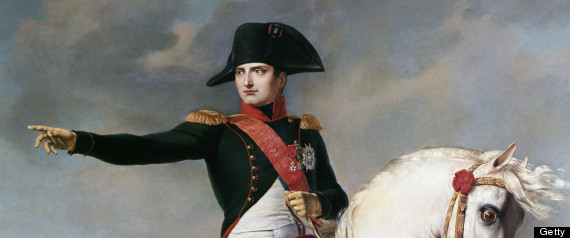
     Many people have different opinions on Napoleon Bonaparte, and whether he was good or evil. But in the end, what stands out is the huge impact he had on the world and Europe especially. Long ago when Napoleon controlled Europe, he impacted European society in many different ways. One impact he had, was on European economic systems. Napoleon encourage new industry and built new roads and canals. He also established mitocracy, which allowed citizens to acquire jobs based on their skills and not just their social class or connections. This allowed for many poor citizens to have jobs and for many jobs to be created. Ida M Tarbell wrote, "These deeds are great epics. They move in noble, measured lines and stir us by their might and perfection. It is only a genius of the most magnificent order which could handle men and materials as Napoleon did.". This explains how Napoleon was able organize men and materials like no other. How he was able to do great things such as establish ways to form a more efficient economy. Another impact that Napoleon had was on European political systems. During his rule, Napoleon redesigned the government entirely. He mixed the social and economic classes, and allowed for economic access for all classes. He made education accessible to all, not just the rich. Napoleon also made the government more democratic. From the writings of Madame de Staël, "It is necessary" he said "to do something new every three months, in order to captivate the imagination of the French nation, with whom anyone who stands still is lost.". This excerpt helps show that Napoleon cared for his people. He wanted to find ways to keep his people happy and well kept. The final impact Napoleon had was on the European social system. There were many ways that he improved the European social system. Due to Napoleon new laws and political system, he improved education and daily life. More citizens had rights to property and access to education, not just the rich. He also encouraged the sharing of new ideas and new economic systems. He gave economic access to all classes. From the words of Marshal Michel Ney, "The times are gone when the people were governed by suppressing their rights. Liberty triumphs in the end and our august emperor comes to confirm it." . This quote explains how Napoleon gave his people more freedom and access to new things.  How he cared about the rights of his people and did not suppress them.
Citation

Citation

Wednesday, October 8, 2014

Capitalism, Socialism, Communism

     This week in history class, we had a very entertaining lesson on Karl Marx's theory of capitalism. To begin the lesson, we were all given three Hershey's Kisses. Then, everyone had to play Rock Paper Scissors with each other in an attempt to win chocolates. If you won, you took one Hershey's Kiss from the class mate. If you lost, you had to begrudgingly surrender one of your chocolates. After we finished playing, some were left with 10 and some were left with none. The teacher then collected all of the chocolates and handed them out again to make sure we all had three. The purpose of this was to represent that capitalism allowed for some people to become really rich or really poor. Then the wealth was collected and redistributed among the population. I really enjoyed this lesson. Especially because we got to move around and work with our hands. It was a relief from writing notes and analyzing pictures.
     Adam Smith's Invisible Hand theory was also beneficial to the poor. In the Invisble Hand theory, the poor would help themselves. The theory purposes that by letting the economy run freely with no support or guidance, people will buy things from venders and the economy will naturally d flourish as if an invisible hand is guiding it. This will allow for the poor to acquire goods more easily and at a lower price. The Invisible Hand mostly benefitted the poor. Adam Smith developed this theory wanting to give the poor more options. The Invisible Hand allowed the poor to earn money and purchase items with no restraints. The theory included commerce and free trade. This made acquiring everyday items much easier for the poor.
     For their time, both of these theory's were revolutionary. They still play a big role in the world today. I believe that both of these options are not perfect and could be made better. But out of the two, Adam Smith's theory is definitely superior. I believe that the collecting and redistributing of wealth would not be liked. People should be able to work hard and earn a lot of money with out having it taken away and given to others who don't work at all. Adam Smith's theory allows the population to earn their own money at their own pace. The beauty of it is that the economy supports itself and naturally flourishes over time. This theory also prevents the poor from having no money at all. 
   

Wednesday, October 1, 2014

MOSI Live Chat Expereince

     The live video chat with Jamie was very cool. Especially because it was all the way over from Britain. Also, because we were getting information straight from the source rather than online. But we did have to do a lot of work to prepare for the chat. One thing we did to prepare was to read, observe, and investigate the MOSI website and write down three things that we learned. Another way we prepared for the chat was by watching a video of Jamie giving a tour of the museum and keeping a running list of terminology. We also had to draft two questions about industrialization with our group that we would like to ask Jamie during the chat. Lastly, we used our google keyword search skills to find the definitions of the MOSI machines video vocab.
     During the chat we learned many things about the machines, how they work, and the whole process of producing fabric. Before the production of factories and steam powered machines, the whole process to produce cloth took weeks. Also, the spinning wheel, which was usually manned by children, was slow and hand powered. The spinning wheel has been around since the 11th century and was generally simple. Later, Richard Arkwright invented the water frame, which was patented in 1769. The water frame was a faster alternative to the spinning wheel and was originally powered by water wheel. Another thing we learned during the chat was the positive and negative impacts of the industrialization of textile production on families. Some of the positive impacts were that families no longer had to spend weeks producing cloth. They now had cloth readily available to them. Also,  more jobs were created due to the factories. A negative impact was that many of the people who went to work in the factories eventually lost limbs, died by being sucked up into a machine, or had a terrible factory accident. All the knowledge that Jamie had of everything in the museum, made me realize that being a museum curator is not easy. Curators are basically a teacher. Teaching the public about our history.
     Overall, I liked the MOSI Video chat. It is fun to hear information directly from the source than looking it up on the internet. I think that I learned a lot more from discussing the topic with an outside expert. I would definitely like to do this again in the future and I believe that I will benefit from it.


Sunday, September 7, 2014

Why was Industrialization so Revolutionary

     In honors history 10 A block, we are exploring the topic of the industrial revolution. The essential question is, what was ' revolutionary ' about industrialization? The 4 ingredients to industrialization that we have talked about are people, technology, resources, and transportation.
     One ingredient that played a big role in industrialization was technology. During this time period,  many breakthroughs in technology were produced. Such as the steam engine and improved iron. Before the steam engine, mines were cleared and emptied by hand, and transportation was very limited. The steam engine allowed for water to be pumped out of mines, rather than the slow and dangerous process of doing it by hand. The steam engine was also fitted to power boats, trains, and locomotives which aided in faster transportation and shipping of goods. Before the invention of improved iron, smelting iron was difficult and produced iron that was expensive and not the best quality. In 1709, Abraham Darby discovered that smelting iron with coal gave off impurities that damaged the quality of the iron. Once he knew this, he figured out a way to remove these impurities and produce better quality and less expensive iron. This improved iron was then used to build most of the railroads. Breakthroughs like these were truly revolutionary and changed the world as we know it. Without them, we would not be where we are today.
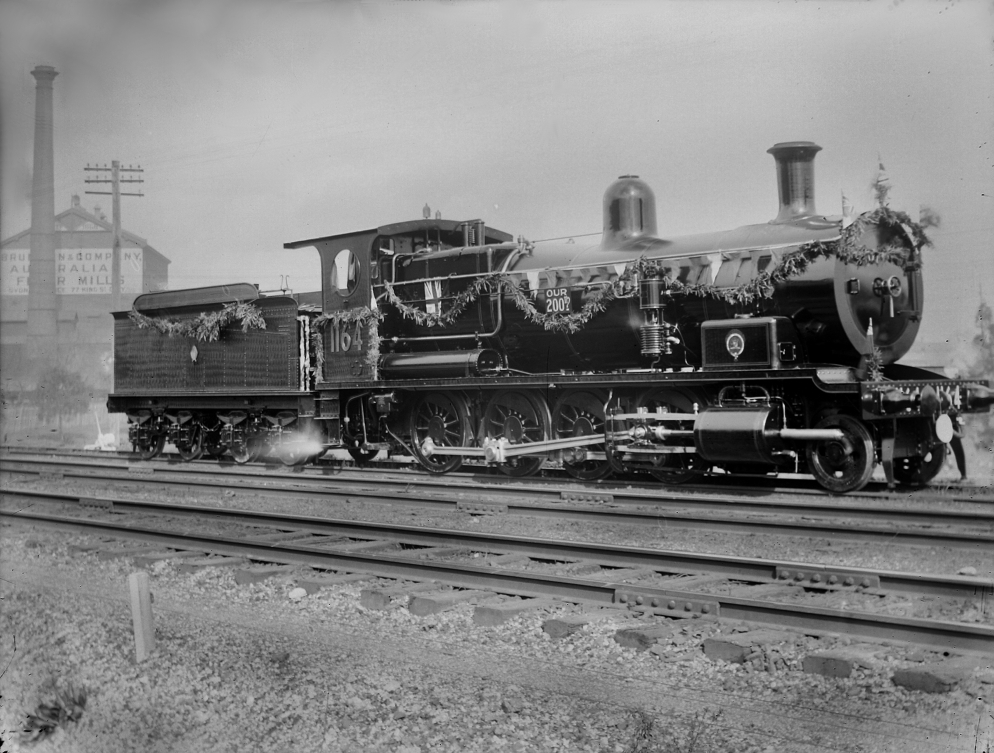
     Another ingredient that played a big role in industrialization was transportation. This time period was also know for new forms of transportation. Such as the steam locomotive and the steam boat. Before the steam locomotive, factories relied on water travel to ship their products. The invention of the steam locomotive made it easier for factories to sell to areas where water travel could not get to.  The invention of the steam boat played a big role also. Before the steam boat, goods were transported on wooden ships. They were slow and could not carry a lot. The steam boat was a lot faster and could carry 10 to 20 times the amount carried by wooden ships. These inventions were truly revolutionary for their time and still are today, because without them we would not be where we are today.Citation

Citation

Thursday, August 28, 2014

Molding The Minds of The Future


             Hello, I'm Matthew. I am a high school sophomore and this is a portfolio of my work. This particular blog post is on the topic of teachers. The unsung heroes of our society.

             Most people, especially students, take teachers for granted. They're not just people who bombard us with homework and assignments. They mold the minds of our future. People like Bill Gates and Steve Jobs had to learn from somewhere. What makes a teacher truly great is the ability to understand the students and their learning needs. A great teacher figures out a way to help the students really absorb the information. Instead of having them read a chapter of the textbook in class and complete a packet for homework. Less can be more. Sometimes interactive activities and group work really help. When I was in sixth grade I had a science teacher named Mr.Williams. To this day he has been the best teacher I have ever had. Mr.Williams might not have been the one to hand out candy or not assign homework. But he didn't sabotage us when it came time for tests. He made sure that everyone was totally comfortable with the subject before testing us. He would use every weapon in his arsenal.This is a vital quality to have in order to succeed as a teacher.  A specific thing that you, Mrs.Gallagher, could do to really support me this year would be to really understand us students and our learning needs.

             I agree with John Green that it is our duty as students to use our education to do great things. Someday we will be the ones responsible to change the future and push society forward. For this year I hope to reach a 4.0 gpa and hopefully keep improving it. To reach this goal I will work to keep all quarter grades in the A range.